As pickleball continues to grow in popularity, more homeowners, schools, and commercial facilities are exploring dedicated court installations. One of the most important questions buyers should ask is not how much it costs, but what type of project they are actually building.
Different use cases require different design approaches, materials, and long-term planning strategies. This article outlines three common pickleball court construction scenarios and what each one involves.
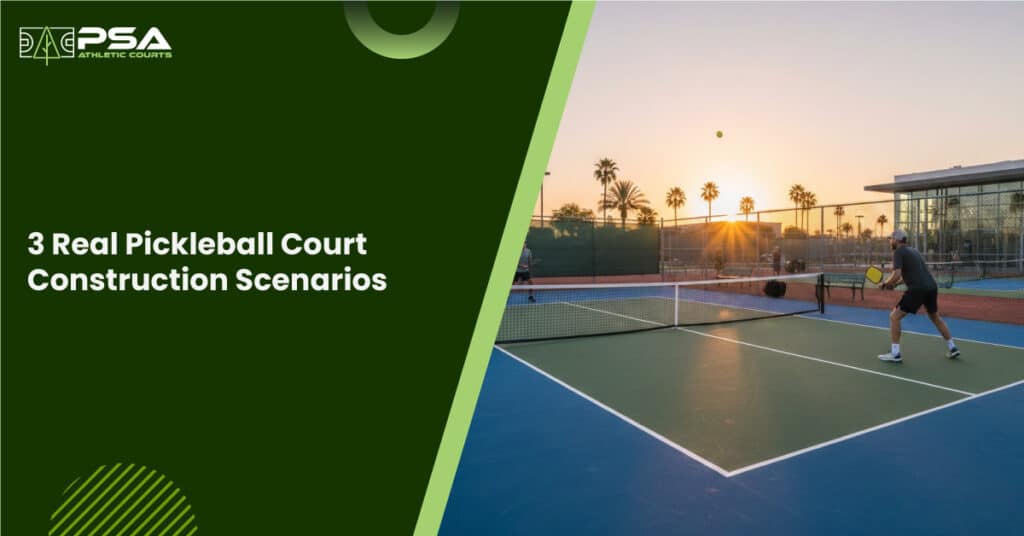
What Determines the Right Construction Approach?
Before reviewing scenarios, it is important to understand the main variables that shape every project:
- Court size and layout
- Surface materials
- Site preparation
- Drainage systems
- Usage frequency
- Maintenance expectations
Understanding how big a pickleball court is helps align space planning with actual project goals.
Scenario 1: Residential Backyard Court
Best for: Homeowners, families, private recreation
Residential courts focus on:
- Space efficiency
- Visual integration with landscape
- Recreational play
- Minimal disruption
These projects typically use asphalt or acrylic surfaces and prioritize flexibility over tournament-level performance.
Scenario 2: School or Community Courts
Best for: Schools, HOAs, municipal facilities
These installations emphasize:
- Durability
- Safety compliance
- Multi-user scheduling
- Long-term surface performance
According to experienced outdoor court specialists such as Pine State Courts, institutional projects require more rigorous base preparation and drainage planning to withstand high-frequency use.
Scenario 3: Commercial Pickleball Facilities
Best for: Clubs, sports complexes, training centers
Commercial projects prioritize:
- Professional surface systems
- Optimized court orientation
- Lighting and fencing integration
- Maintenance scalability
These courts are designed for continuous use and require higher technical standards.
Why Professional Design Matters
Experienced pickleball court construction companies do far more than install surfaces. They help define:
- Court orientation
- Surface selection
- Drainage engineering
- Long-term maintenance cycles
This prevents functional issues and extends the lifespan of the facility.
Surface Choice and Performance
Surface materials directly impact player experience and durability.
Understanding professional pickleball court surfacing tips and specifications helps buyers choose surfaces that balance comfort, traction, and longevity.
Lower-quality surfaces often lead to accelerated wear and frequent repairs.
When Should You Plan for Resurfacing?
Even well-built courts require ongoing care.
Most courts need resurfacing every few years depending on usage levels and climate exposure. Understanding when to resurface a pickleball court ensures consistent play quality and safety.
Choosing the Right Construction Partner
Selecting the right design and build team determines project success more than any single material choice.
Professional pickleball court designers evaluate:
- Site conditions
- Project goals
- Surface performance needs
- Long-term maintenance planning
For property owners planning new installations, experienced court design teams like Pine State Courts provide guidance that aligns construction decisions with real-world performance expectations.
Final Thoughts
Pickleball court construction is not a one-size-fits-all process. Residential, institutional, and commercial projects each require different technical approaches and long-term strategies.
Understanding your project type first leads to better decisions, stronger performance, and more sustainable facilities.