Pickleball has taken the sports world by storm, attracting players of all ages with its fast-paced rallies and social atmosphere. However, the very movements that make pickleball exciting rapid dinks at the kitchen line, sudden lobs, and explosive lateral lunges place unique physical demands on the body, especially the feet.
For many players, the excitement of a match can be cut short by foot fatigue, shin splints, or sharp heel pain. To stay on the court and play pain-free, it is essential to understand the biomechanical forces at work and protect your feet’s natural arches during dynamic movement.
The Biomechanics of Court Movement
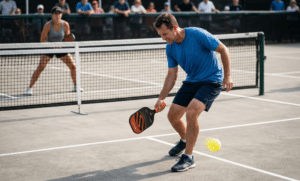
Pickleball is a game of constant adjustment. Unlike sports with linear movement, like running, pickleball is dominated by lateral cuts, pivots, and quick forward-and-backward bursts.
During a typical rally, a player might sprint to the kitchen line, plant their feet, and immediately slide laterally to return a shot. Each of these movements requires the foot to act as both a shock absorber and a rigid lever for propulsion.
When you plant your foot to make a sudden change of direction, a massive amount of kinetic force is transferred through your ankle and into the foot’s arch. Under this stress, the foot naturally pronates (rolls inward) to absorb the shock. However, the repetitive, high-velocity nature of pickleball movements can cause the arch to collapse excessively, putting abnormal strain on the surrounding muscles and tendons.
The Threat of Plantar Fasciitis and Strain
When the arch collapses repeatedly under dynamic loads, it places direct stress on the plantar fascia the thick band of tissue that supports the arch and connects the heel to the toes. This strain can lead to micro-tears and inflammation, a condition known as plantar fasciitis, which causes a sharp, stabbing pain under the heel, particularly during the first steps of the day or after a long match.
Additionally, overpronation on the court alters the alignment of the entire leg. It forces the tibia to rotate inward, which can lead to shin splints, patellar tendonitis (runner’s knee), and hip stiffness. For players over 40, whose ligaments naturally lose flexibility, this lack of structural stability can accelerate wear and tear on the joints.
Moving Beyond Standard Court Shoes
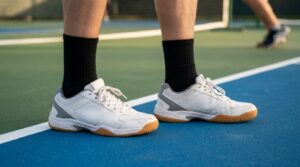
To prevent injuries, players invest heavily in specialized court shoes. While court shoes are designed with durable rubber outsoles and reinforced sides to prevent rolled ankles, their interior support is often lacking. The standard, thin foam sock liners that come with most court shoes offer little to no arch support and compress completely under load.
Without structured support inside the shoe, the foot is free to slide laterally during explosive movements. This sliding causes muscular fatigue as the toes claw to maintain grip, and it fails to prevent the arch from collapsing under impact.
To stabilize the midfoot and lock the heel cup during quick cuts, players should consider upgrading to specialized insoles for pickleball shoes. High-quality orthotics designed for court sports use a firm, semi-flexible nylon core to support the arch, ensuring it stays at a healthy height even during the most demanding lateral cuts.
Furthermore, a deep heel cup cradles the heel, preventing the ankle from rolling inward and keeping the body’s natural fat pad centered under the calcaneus for optimal impact absorption.
Tips for Protecting Your Feet
In addition to using structured insoles, pickleball players can protect their foot health with a few practical habits:
- Strengthen the Ankles: Strong ankles provide better control during lateral cuts. Practice balance exercises, such as standing on one foot or using a wobble board, to build joint stability.
- Incorporate Dynamic Calf Stretches: Tight calves restrict ankle mobility, forcing the arch to flatten even more to compensate. Stretch your calves before and after every match.
- Give Shoes Time to Recover: If you play multiple times a week, rotate between two pairs of court shoes to allow the foam cushioning to decompress between sessions.
Pickleball is a game of agility, strategy, and longevity. By protecting your feet’s arches and stabilizing your foundation, you can move dynamically, play confidently, and enjoy many more years on the court.