Austin has gone all in on pickleball. Public courts at parks and rec centers fill up fast, new clubs keep opening around the metro, and plenty of players now drive 20 minutes or more for a good game. If you’re new to the area or new to the sport, that’s great news and also a little overwhelming. Which club is actually worth your time and money?
I’ve spent a lot of hours around Austin courts, both playing and on the operator side. Here’s what I’d look at before you sign up anywhere.

1. Start with the weather, because Austin will
This is the part out-of-towners underestimate. Austin summers are long, and triple-digit afternoons are normal from June into September. Outdoor courts get brutal by late morning. Then fall and spring bring pop-up storms and wind that make a lob feel like a coin flip.
That’s why so many local players end up at indoor, climate-controlled clubs. You get the same bounce, the same light and the same temperature every session. You can book a 2 pm game in August and still want to play a second one. If you only play outdoors, you’ll lose weeks of the year to heat and rain, and that makes it hard to keep improving.
If a club says “indoor,” ask two follow-up questions:
- Is it fully air-conditioned, or just covered with fans?
- Is the lighting even across the whole court, or are there glare spots at one end?
Covered courts with fans help, but in July there’s a real difference.
2. Count the courts, then check how busy they are
A club with four courts and 300 members will feel crowded no matter how nice it is. Ask how many courts the club has and what peak hours look like. Evenings after work and weekend mornings are the crunch times almost everywhere in Austin.
Good signs:
- You can book a court online without calling.
- Open play is organized by skill level, so you’re not stacking paddles for 30 minutes.
- The club tells you honestly when it’s slow. Weekday mid-mornings and mid-afternoons are often wide open, which is great if your schedule is flexible.
3. Look for a real path for beginners
Most people don’t quit pickleball because they hate it. They quit because their first few sessions were awkward, nobody explained the kitchen rule, and the better players didn’t want them on the court.
The best clubs fix this on purpose. Look for:
- A free or cheap intro class. One hour with a coach covering the serve, the two-bounce rule and the non-volley zone saves you weeks of confusion.
- Beginner-only open play blocks. Playing with people at your level is how you get your first real rallies.
- Clinics that build on each other. Dinking one week, third-shot drops the next, and so on.
If a club’s only beginner offer is “just show up to open play,” expect a rough first month.
4. Ask about leagues and events, not just court time
Court time gets you exercise. Leagues and events get you a community, and that’s what keeps you coming back.
Ask whether the club runs:
- Weekly leagues by skill level
- Round robins and small tournaments
- Social nights, like themed open play or mixers
- Corporate and team events (a good sign the club knows how to run a smooth event)
The clubs that try new formats tend to have the most energy. If the calendar looks the same every month, that tells you something.
5. Do the membership math
Austin clubs price in a few ways: drop-in fees, court rentals by the hour, and monthly memberships. There’s no single right answer. It depends on how often you play.
A quick rule of thumb:
- Once a week or less: pay per visit or split a court rental with friends.
- Two or three times a week: a membership usually pays for itself.
- Mostly weekday mornings: check for off-peak or morning-only memberships. Several clubs offer them, and they’re often much cheaper.
Also check what’s included. Does the membership cover open play and clinics, or only court booking? Can you bring a guest? Are paddle rentals available if a friend wants to try it?
Many Austin clubs also accept fitness benefits like SilverSneakers or similar programs. If you have one through your insurance or employer, ask. It can cut your cost a lot.
6. Read the reviews, then visit
Google reviews tell you a lot about a club, especially what people complain about. Look for patterns. One bad review about a court booking is noise. Twenty reviews saying the front desk is disorganized is a signal.
Then go play once before you commit. Pay attention to:
- How you’re greeted and whether someone explains how things work
- Court surface and net quality
- Whether open play feels friendly or cliquey
- Parking, restrooms and water. The unglamorous stuff matters when you’re there three times a week.
7. Think about the drive, honestly
Austin traffic is real. A club that’s 15 minutes away at 10 am can be 40 minutes at 5:30 pm. Before you pick, map it at the time you’ll actually be driving.
Many of the bigger indoor clubs sit just outside the city core, in places like Pflugerville, Round Rock, Cedar Park and South Austin, where there’s room for large buildings. For a lot of players the tradeoff is worth it: a slightly longer drive for air conditioning, more courts and easier booking.

What a good Austin club looks like
Put it together and the checklist is pretty short:
- Climate-controlled indoor courts, so heat and rain don’t cancel your week
- Enough courts that booking is easy
- A real beginner path with an intro class and level-based play
- Leagues and events that build a community
- Pricing that fits how often you play
- Staff who make you feel welcome the first time
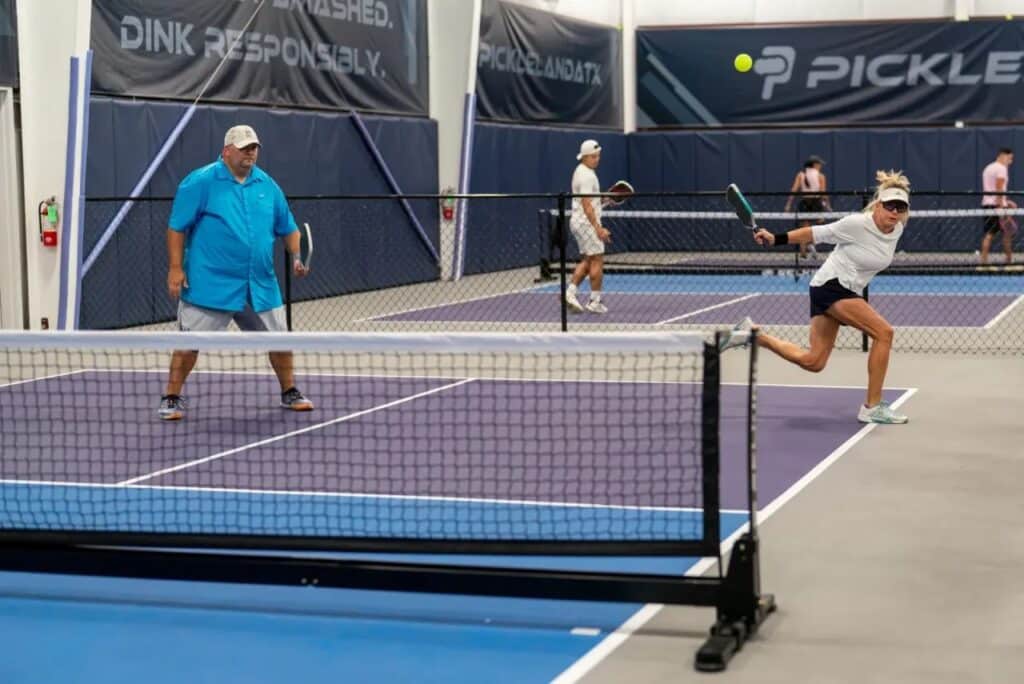
As one example, Pickleland in Pflugerville runs nine indoor, climate-controlled courts with a free intro class, open play by level, leagues and regular events. It’s the kind of setup to look for if you want an Austin pickleball club you can play at all year. Wherever you end up, use the checklist above and play a session before you commit.
Final tip
Don’t overthink it. Pick the club that gets you on the court most often, with people you like playing with. In Austin, that usually means somewhere cool, organized and close enough that you’ll actually go. The rest takes care of itself once you’re playing three times a week.