Pickleball has exploded from a niche driveway pastime into a global athletic phenomenon. If you are reading this, you likely already know the addictive “pop” of the ball and the thrill of a fast-hands exchange at the kitchen line. But as the sport evolves, so does the competition. If you want to dominate the court, avoid the dreaded “pickleball elbow,” and play well into your later years, playing more matches isn’t enough. You need to Cross-Train for Pickleball.
In this deep-dive guide, we will explore the latest 2024-2025 training protocols used by pros and physiotherapists. We aren’t just talking about doing a few pushups; we are talking about building a body that is agile, explosive, and durable.
Let’s find out how to transform your game off the court so you can win on it.
Why You Must Cross-Train for Pickleball
Is playing pickleball enough exercise? It’s a common question. While pickleball provides great moderate cardio, it is a repetitive, one-sided sport. You perform the same lunges, the same swings, and the same stops over and over.
Without a dedicated plan to Cross-Train for Pickleball, you risk developing muscle imbalances. The quads get strong while the glutes get lazy; the dominant arm overworks while the non-dominant side atrophies. Cross-training fills these gaps. It builds the “armor” your body needs to handle the sudden stops, lateral cuts, and explosive overheads that define the modern game.
The 3 Big Benefits
- Injury Prevention: Strengthening the muscles around your joints (knees, shoulders, elbows) acts as a shock absorber, protecting ligaments from tears and strains.
- Explosive Power: You can’t hit a hard drive if you don’t have rotational core strength. Cross-training unlocks the power hidden in your hips and core.
- Court Coverage: Improved agility and cardiovascular conditioning mean you get to the ball faster and recover quicker between points.
The 4 Pillars of Pickleball Performance
To effectively Cross-Train for Pickleball, we need to categorize our training into four specific pillars. A balanced routine will touch on all of these throughout the week.
| Pillar | Focus | Pickleball Application |
| 1. Strength & Stability | Muscle endurance, tendon health, joint armor | Powerful drives, stable dinking platform, knee protection. |
| 2. Agility & Speed | Footwork, reaction time, acceleration | Reaching drop shots, lateral coverage, recovering to the middle. |
| 3. Metabolic Conditioning | Aerobic and Anaerobic capacity | Staying sharp in the 3rd set, recovering between rallies. |
| 4. Mobility & Recovery | Range of motion, flexibility, tissue quality | Reaching low balls without pain, avoiding stiff backs/shoulders. |
Pillar 1: Strength Training for Power & Durability
Modern strength training for pickleball isn’t about bodybuilder muscles; it’s about functional movement. We focus on “posterior chain” (back of the body) strength and rotational power.
Lower Body: The Foundation
Your power comes from the ground up. If your legs are weak, your shots will be weak.
- Goblet Squats:
- Why: Mimics the athletic “ready position” and strengthens quads/glutes.
- How: Hold a dumbbell at chest height. Squat down keeping your chest up and knees driving out.
- Multi-Planar Lunges (The Clock Lunge):
- Why: Pickleball isn’t played in a straight line. You lunge forward, sideways, and diagonally.
- How: Lunge forward (12 o’clock), lateral (3 o’clock), and reverse (6 o’clock). This bulletproofs your knees against awkward twisting motions.
- Single-Leg Romanian Deadlifts (RDL):
- Why: Vital for hamstring health and balance. It teaches you to hinge at the hips rather than rounding your back when digging out low balls.
Upper Body & Core: The Engine
Many players suffer from shoulder impingement because they lack back strength. We want to pull more than we push to correct the “hunched forward” posture often seen in players.
- Rotational Medicine Ball Throws:
- Why: Pickleball is a rotational sport. This drill builds explosive power for your forehand and backhand drives.
- How: Stand sideways to a wall. explosively throw a medicine ball against the wall using your hips to generate force, not just your arms.
- Face Pulls / Band Pull-Aparts:
- Why: The ultimate prehab for shoulders. It strengthens the rear delts and rotator cuff, counteracting the internal rotation of swinging a paddle.
- The Pallof Press:
- Why: Anti-rotation core strength. It trains your core to resist twisting, which protects your lower back when you reach for a wide dink.
Pro Tip: Avoid heavy overhead pressing if you have existing shoulder issues. Landmine presses are a shoulder-friendly alternative that still builds pushing strength.
Pillar 2: Agility & Footwork (Speed kills)
You don’t need to be the fastest sprinter to be the fastest player on the court; you just need to be the most efficient. When you Cross-Train for Pickleball, agility drills should mimic the small, precise movements of the game.
The “Split Step” Drill
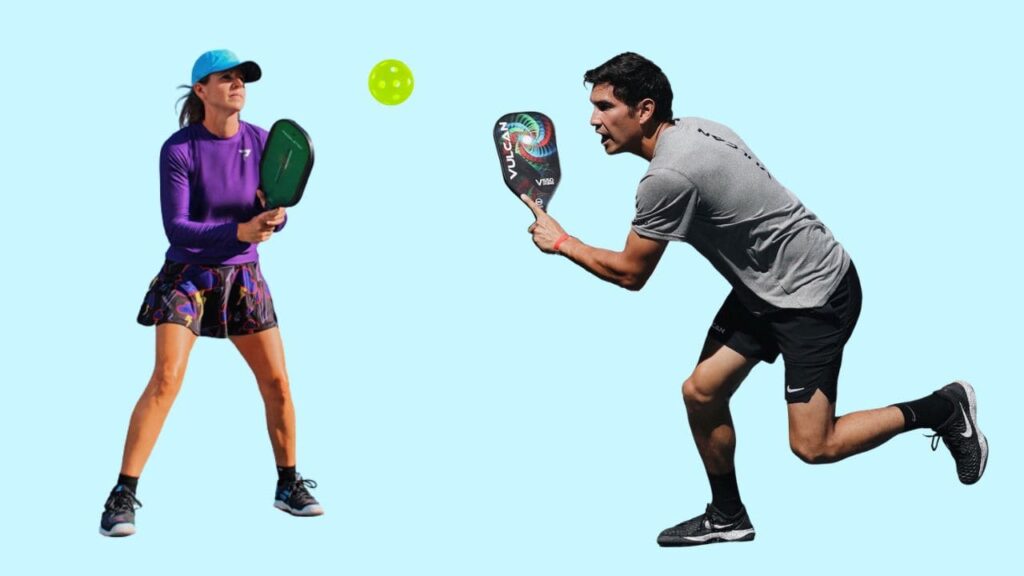
The split step is the most critical footwork pattern in the game. It is a small hop you take right as your opponent hits the ball, loading your legs like springs.
- Drill: Set a timer for 30 seconds. Shuffle laterally. Every 3 seconds, perform a “split step” (a quick, balanced hop landing on the balls of your feet), then immediately burst 2 steps forward or backward.
Ladder Drills for Coordination
Pickleball requires “fast feet” to adjust to bad bounces or net cords.
- Ickey Shuffle: A classic 3-step pattern through an agility ladder.
- In-In-Out-Out: incredible for lateral stability.
- Key Focus: Keep your eyes up! Beginners look at their feet; pros look at the court. Train yourself to do these drills while looking forward.
Reaction Ball Training
Use a “Z-ball” (a rubber ball with nubs that bounces unpredictably).
- Drill: Drop the Z-ball and try to catch it after one bounce. This mimics the chaotic nature of a deflected ball at the net and trains your hand-eye coordination under pressure.
Pillar 3: Metabolic Conditioning (Cardio)
Jogging 5 miles at a slow pace won’t help you much in a high-intensity pickleball rally. Pickleball is a sport of intermittent bursts. You sprint for 10 seconds, rest for 15, then sprint again. Your cardio training should match this.
HIIT (High-Intensity Interval Training)
This is the gold standard when you Cross-Train for Pickleball. It improves your VO2 Max and your ability to recover quickly between points.
- The 20/40 Protocol:
- Sprint (running, stationary bike, or rower) at 90% effort for 20 seconds.
- Walk/Rest for 40 seconds.
- Repeat for 10-15 rounds.
- Result: Your heart rate recovery time will improve, meaning you won’t be gasping for air when the score is 10-10.
Zone 2 Training (The Base)
While HIIT is for performance, Zone 2 (steady, conversational pace cardio) is for longevity and recovery. A 30-minute steady cycle or brisk walk promotes blood flow and builds the aerobic base that supports high-intensity efforts.
Pillar 4: Mobility & Injury Prevention (“Prehab”)
The most common injuries in pickleball are:
- Pickleball Elbow (Lateral Epicondylitis)
- Achilles Tendonitis / Calf Strains
- Lower Back Pain
Here is how to fix them before they happen.
Bulletproofing the Elbow
Pickleball elbow is usually caused by weak forearm extensors and poor wrist mechanics.
- Wrist Extensions: Use a light dumbbell (2-3 lbs) or a resistance band. Perform slow, controlled wrist extensions.
- Tyler Twist: Using a “FlexBar,” this eccentric exercise is clinically proven to treat and prevent tennis/pickleball elbow.
- Grip Strength: Carry heavy dumbbells (Farmer’s Carries) to build general forearm resiliency.
Saving the Achilles
The “pop” of a torn Achilles is the sound no player wants to hear.
- Eccentric Heel Drops: Stand on a step. Rise up on two feet, but lower yourself down slowly (3-5 seconds) on one foot. This lengthens and strengthens the tendon under load.
- Soleus Raises: Seated calf raises. These target the soleus muscle, which takes a massive load during the bent-knee shuffling of pickleball.
Dynamic Warm-Up (Non-Negotiable)
Never walk onto the court cold. A 5-minute dynamic warm-up increases tissue temperature and reduces injury risk by over 50%.
- Routine: Leg swings (forward/back and lateral), arm circles, torso twists, high knees, and butt kicks.
Sample Weekly Schedule: How to Cross-Train for Pickleball
You don’t need to train like an Olympian. Consistency beats intensity. Here is a balanced schedule for a recreational player who plays pickleball 3 times a week.
| Day | Activity | Focus |
| Monday | Strength Training | Full body lift (Squats, Rows, Lunges, Planks). 45 mins. |
| Tuesday | Pickleball Play | + 15 min Post-game static stretching. |
| Wednesday | Active Recovery / Mobility | Yoga, Pilates, or Zone 2 Cycling. Focus on hip openers. |
| Thursday | Pickleball Play | + 15 min Post-game static stretching. |
| Friday | Agility + HIIT | Ladder drills + 15 mins of interval sprints. Short & sharp. |
| Saturday | Pickleball Play (Long Session) | Competitive play. Focus on utilizing split steps. |
| Sunday | Rest | Complete rest or a casual family walk. |
Latest Gear & Trends for 2025
As the sport grows, technology is entering the cross-training space.
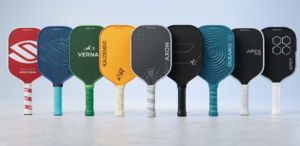
- Weighted Paddles: Some players use slightly heavier paddles during practice drills to build wrist stability (use with caution to avoid overuse).
- Recovery Tools: Percussion massage guns (like Theragun) and compression boots are becoming standard for post-tournament recovery.
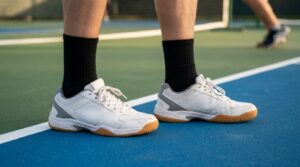
- Footwear: The trend is moving away from running shoes (dangerous for ankles due to high stack height) toward dedicated court shoes with wide outriggers for lateral stability. Never cross-train or play in running shoes!
Conclusion: The Long Game
To Cross-Train for Pickleball is to invest in your future on the court. It turns you from a player who “survives” games into a player who dictates them.
By strengthening your legs, you lunge deeper. By stabilizing your core, you hit harder. By conditioning your heart, you last longer. And most importantly, by bulletproofing your joints, you stay off the sideline and in the game.
Start small. Add one strength day and one agility session to your week. Your body, and your doubles partner, will thank you.